We finally caved in. After watching hours of TV reviews and visiting multiple electronics shops across different areas of Tokyo, we settled on one TV and bought the LG OLED C4 48-inch.
Our previous TV, a Sony Bravia LCD 43-inch, was purchased in 2018 when we moved to our old place in Yotsuya. It was still relatively new when we relocated to our current home in 2021, so we didn’t bother replacing it—until now.
To be honest, the Sony was still good, and we wouldn’t have minded keeping it for a few more years. But I started noticing how newer TVs offered sharper images, darker blacks, and better contrasts. Once you’ve seen these upgrades, flaws you never noticed before become glaringly obvious. That’s when we tumbled down the rabbit hole of searching for a new one.
From LCD to OLED TV
OLED TVs are renowned for their vivid colors, perfect blacks, and infinite contrasts. Back in 2018, they were prohibitively expensive and had a reputation for screen burn-in risks, plus they struggled in bright rooms. They were ideal for dark spaces, which wasn’t the case for our living room, with its big windows on two sides—one catching the sunrise, the other the sunset.
Since then, OLED technology has evolved, and prices have dropped to more reasonable levels. They’re still not perfect, and definitely not cheap, but they’ve become more mainstream. Newer technologies like Mini LED have emerged, offering brighter displays and improved contrast over traditional LEDs, but they still lag behind OLED in overall picture quality. For now, OLED remains the gold standard.
Life’s Good with LG
So, we decided on an OLED TV. I researched brands available in Japan—Sony, Sharp, Panasonic, Hisense, TCL—and ultimately chose LG, especially after learning that Sharp and Panasonic were using LG’s panels anyway.
Sony’s offerings were solid, but it seems they’re focusing more on Mini LED technology, like with their flagship Bravia 9. When it comes to OLED, LG appears to lead the pack. Luckily, in Japan, LG TVs are cheaper than other brands, thanks to the local preference for Japanese names.
Outside Japan, Samsung seems to dominate the TV market, but they don’t sell here. I didn’t spot them in any electronics shops or Japanese-language YouTube reviews. Some are available online, but I steered clear—Samsung doesn’t seem invested in the Japanese market, and those units might lack Japan-specific features.
Hisense and TCL look promising and are gaining traction in places like the US. In Japan, though, they’re still viewed as budget-oriented and not yet on par with their Japanese or South Korean rivals. Maybe it’s just perception, and that could shift in a few years, but for now, we stuck with the more established South Korean brands.
Why Only 48 Inches?
Our old TV was 43 inches, and honestly, we didn’t mind sticking with that size. LG offers a 42-inch option too, but surprisingly, it’s pricier than the 48-inch model we got. Apparently, the 42-inch version is popular with gamers who use it as a desktop monitor, driving up demand. So, by choosing the 48-inch LG, we scored a bigger screen for less money. It was the perfect excuse to upgrade.
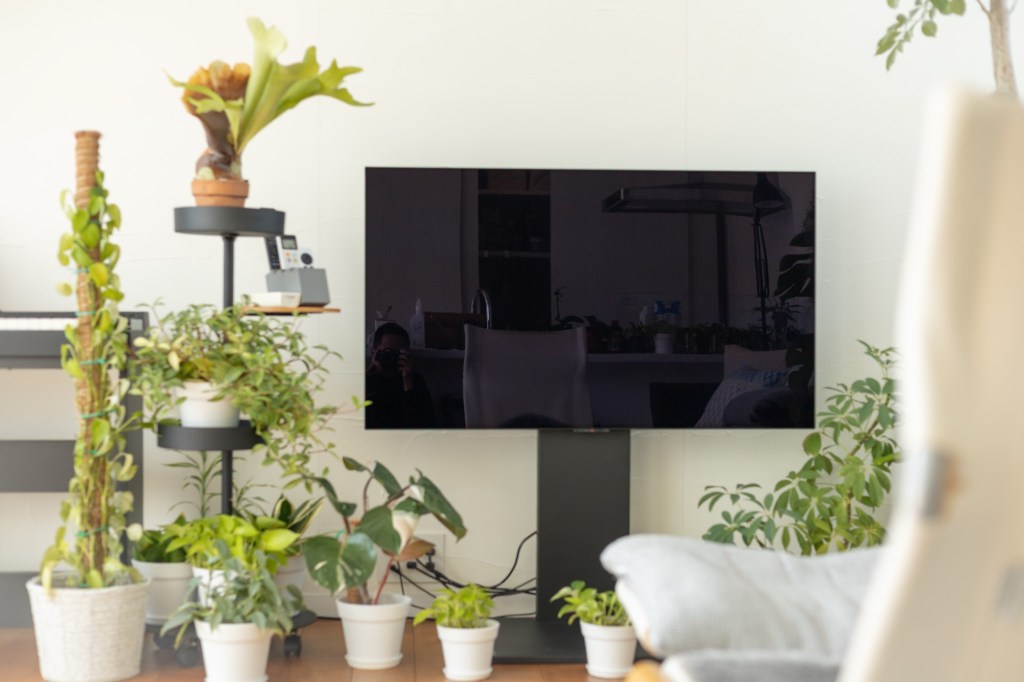
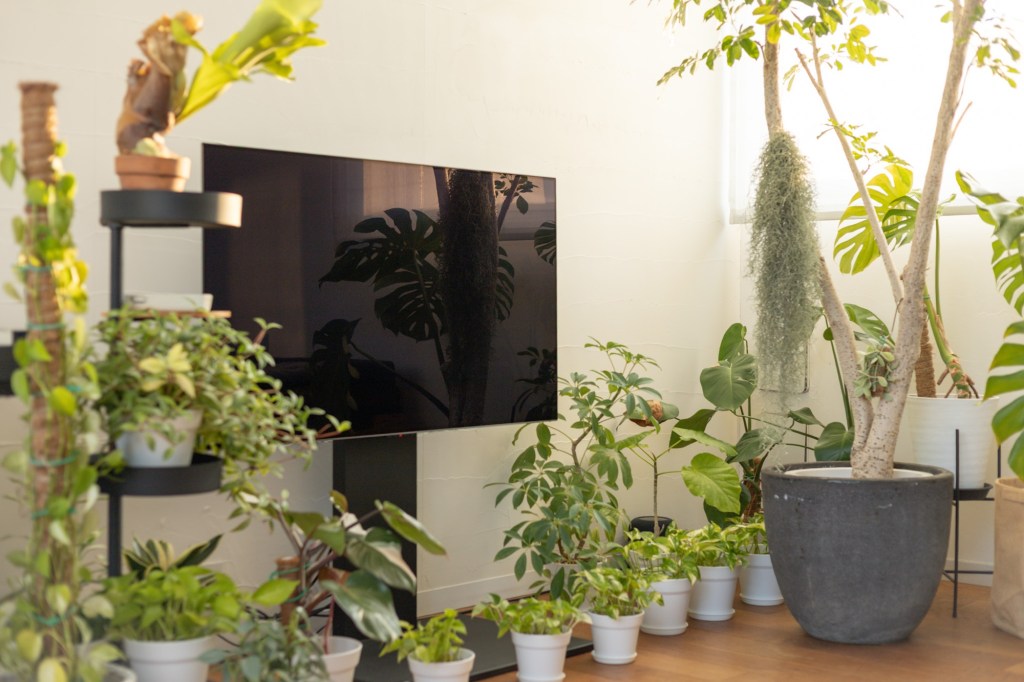
We didn’t go for the 55-inch size—now the smallest for many companies’ flagship OLED and Mini LED models—because it’d overwhelm our living room wall. Half the wall is reserved for our piano, the other half for the TV, with plants filling the space between. Anything over 48 inches would look disproportionate. Besides, we didn’t want the TV to dominate the room; we prefer it to blend into the background when it’s off.
Our Current TV Setup
We didn’t mount the TV on the wall or on a TV console. Instead, we attached it to a black stand. No drilling required, and we can move it if we feel like it. The cables are neatly tucked behind the stand, along with my Apple TV 4K, which connects to two HomePods hidden behind the plants.
We use the HomePods as our soundbar. We’re happy with the sound quality, even if online folks insist it’s not as good as a dedicated home theater system. For our needs, it’s more than enough.
We also stream Apple Music through it, controlling the LG TV, Apple TV, and HomePods with Siri via HomeKit. They’re all part of our Apple ecosystem now. We’ve even set them up to turn off automatically at midnight or when we both leave the house.
Conclusion
Now we just need to figure out how to offload our old TV. We could sell it on Mercari, but dealing with buyers for a seven-year-old set—lacking features people might expect in 2025—sounds like a hassle. We might ask friends if they’re interested, as long as they pick it up themselves. We’ll sort it out eventually.
For now, we’ve had the LG OLED C4 for a couple of days, and so far, so good. The sharper screen, perfect blacks, and infinite contrasts are everything we hoped for, and that slight size bump feels just right. It’s funny how something we didn’t think we needed has already settled into our home like it’s always belonged. Maybe that’s the trick with upgrades—you don’t realize what you’re missing until it’s there.
So, what about you? Has your TV setup kept up with your life, or is it time to tumble down that rabbit hole too?
 Enrico in Tokyo