We usually plan our vacation in September, primarily to avoid Japan’s August summer vacation period when families with kids are traveling, and secondly to escape the peak summer heat. Prices tend to drop after August, while temperatures remain high. However, in recent years, summer has been extending into late September, so next year we might consider shifting our usual vacation to a later time when it’s cooler.
This year, however, we’ve already planned our trip for September and decided to spend the entire week in just one prefecture in Japan. We wanted to focus on one area and experience life there, even if only for a week. Our goal was to immerse ourselves in the local food, groceries, trains, roads, and nearby towns and cities. We chose Hyogo Prefecture. While most visitors stop in Hyogo for a day trip, using Osaka or Kyoto as their base, we decided to stay in Hyogo and make Kobe our home base—and we believe it was the right choice.
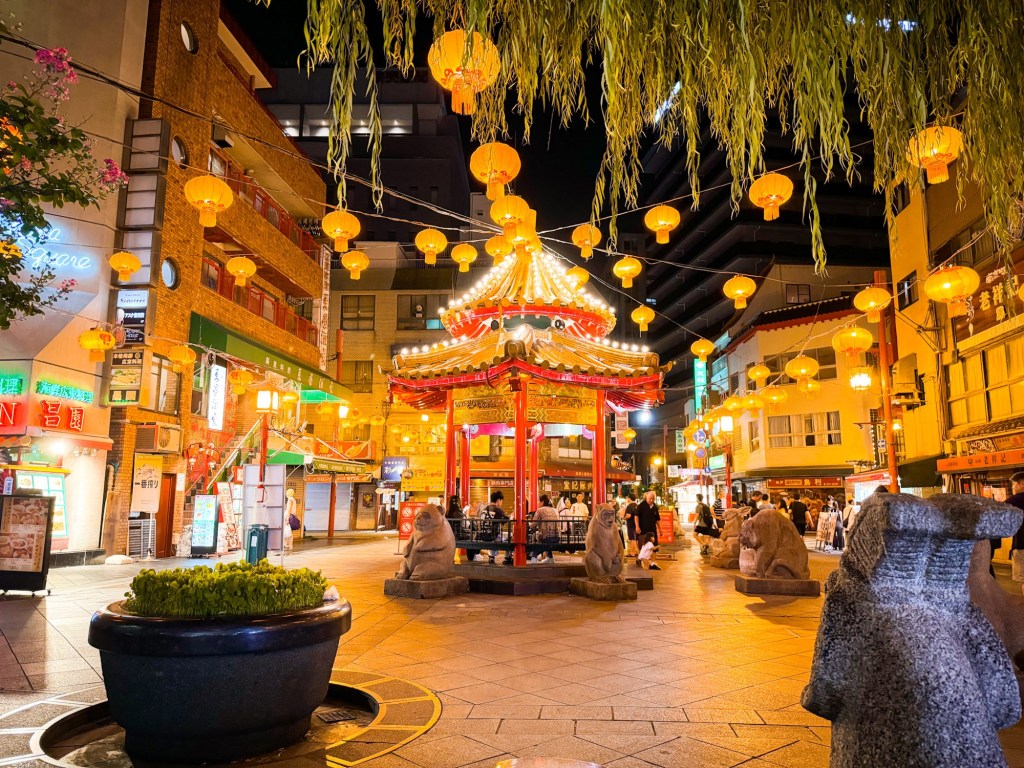
Most foreigners know Kobe for its Kobe beef, which is indeed excellent and can get quite expensive depending on the restaurant. Many locals compare it to Yokohama, as both are port cities with European districts on the hill (Kitano in Kobe and Yamate in Yokohama) and a Chinatown at the base. Both cities are also close to, and sometimes overshadowed by, their more populous neighbors (Osaka and Tokyo). However, upon closer inspection, they are different, each with its own distinct charm.
Day 1: Arrival from Tokyo
We decided to stay at Dormy Inn Kobe Motomachi due to its proximity to Chinatown, Motomachi, and its walking distance to Sannomiya. The building is clean and feels new. The room isn’t very big, but its location near the shopping street and the onsen facilities more than make up for it. They also offer paid parking, although we realized we could have used the cheaper parking lot next door.
On our first day, after arriving at the hotel from Tokyo, we walked 20 minutes southwest to the Kobe Harborland Umie mall for lunch. The walk wasn’t very pleasant due to the summer heat, and Apple Maps gave us a route that took us along a major highway. A few days later, we realized we could have followed the shopping street from Motomachi, which would have kept us under covered walkways most of the way. On the way back, we decided to take the train and relax at the hotel for the rest of the day.
Day 2: Motomachi and Sannomiya
For our first full day in Kobe, we decided to explore our neighborhood and the surrounding areas. We chose not to rent a car today, as we wanted to experience the area on foot.
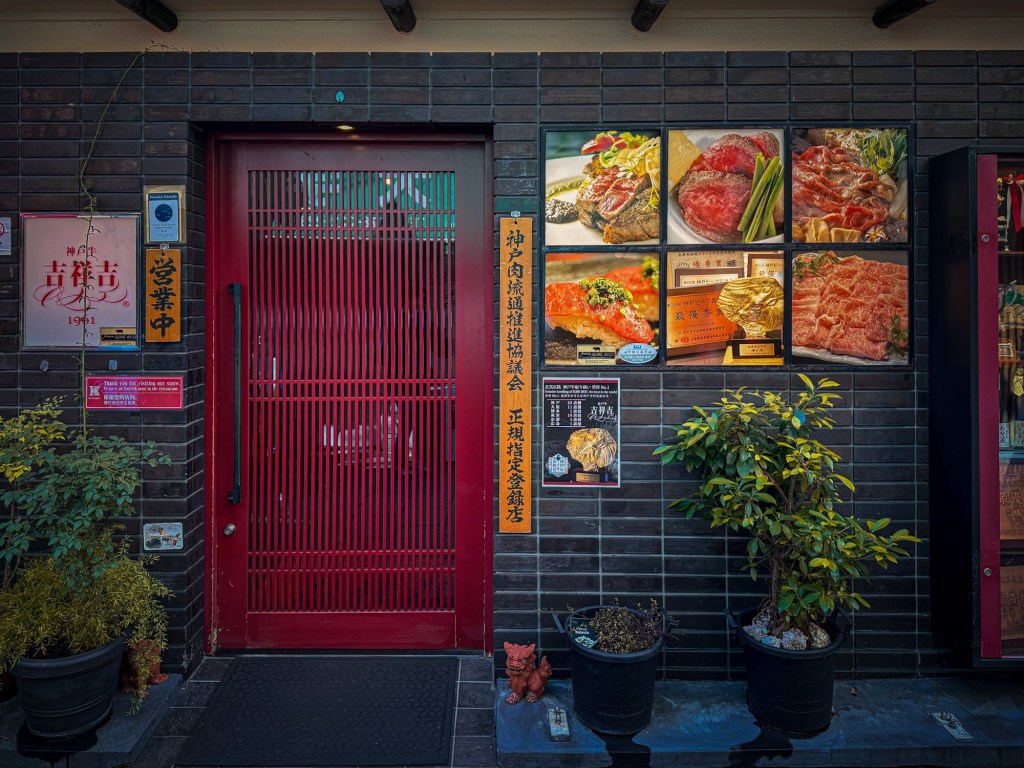
We started our day with breakfast at Motomachi Santos, which we had high expectations for due to the long line outside, but honestly, it was just average. Not the best start, but luckily, lunch at the nearby Kobe Beef Kissho was much better. We got the 25th anniversary special ¥3,900 lunch set, which was a bargain considering the quality of the beef. Now the day was starting to look up.
We spent the afternoon exploring from one end of the Motomachi shopping street to the other end of the Sannomiya shopping street, including many side streets, especially those north of Sannomiya Station, where there are plenty of places to eat and drink. It’s interesting how these long, covered shopping streets are common in city centers in Kansai, particularly in Kobe and Osaka, but not in Tokyo, where they’re more typical in the suburbs, with Asakusa being perhaps the one exception.
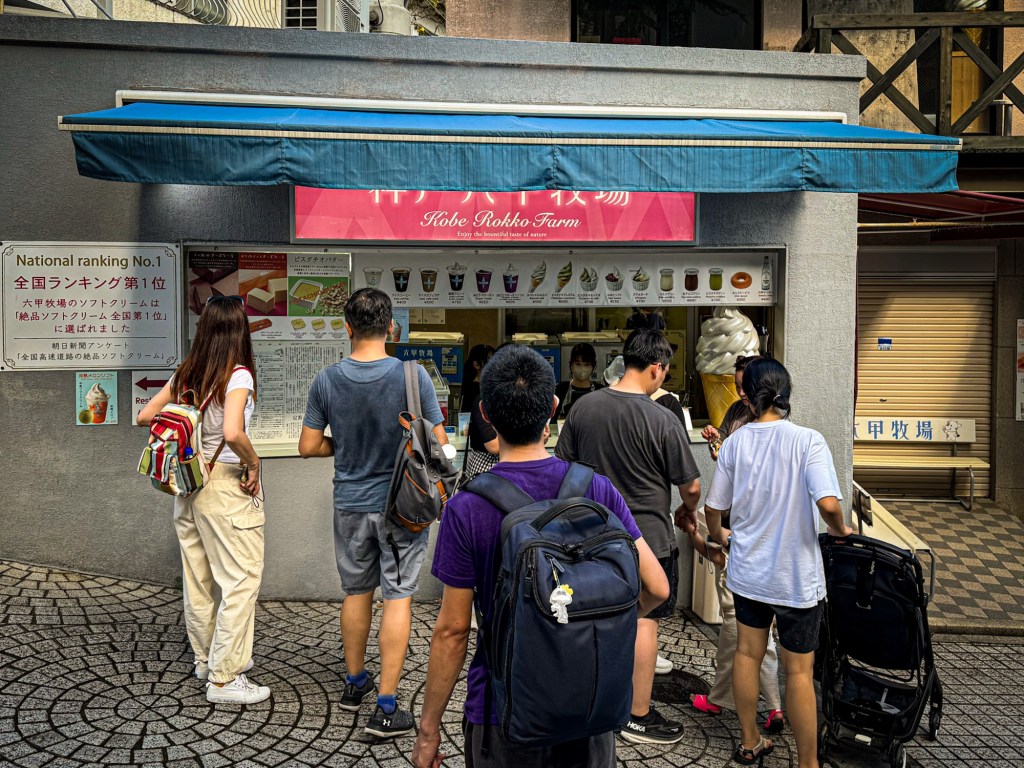
We then walked uphill toward Kitano, known for its old European-style houses and buildings. After the long climb, we spotted Kobe Rokko Farm, a soft-serve ice cream shop, and immediately gravitated toward the more expensive flavor—Pistachio Premium. It was heavenly. With our energy restored, we continued the climb all the way to Kitano Temma Jinja, which offers an amazing view of the city.
For dinner, we decided to try a yakitori place near the station—Kobe Yakitori Stand Nonotori. We had actually tried to get in the previous day but were turned away because we didn’t have a reservation. This time, we made sure to call ahead. Most of the customers were couples, although there were tables in the front for families and larger groups. The food was delicious, and we found ourselves wishing we had a similar spot in our Tokyo neighborhood.
Day 3: Kyudo in Tamba
After grabbing breakfast at a nearby coffee shop, we then went to Nissan Rent-a-car to pick up our car. We initially reserved the Nissan Note e-Power but luckily got a free upgrade to the Nissan Kicks e-Power. This would be our car for the next three days.
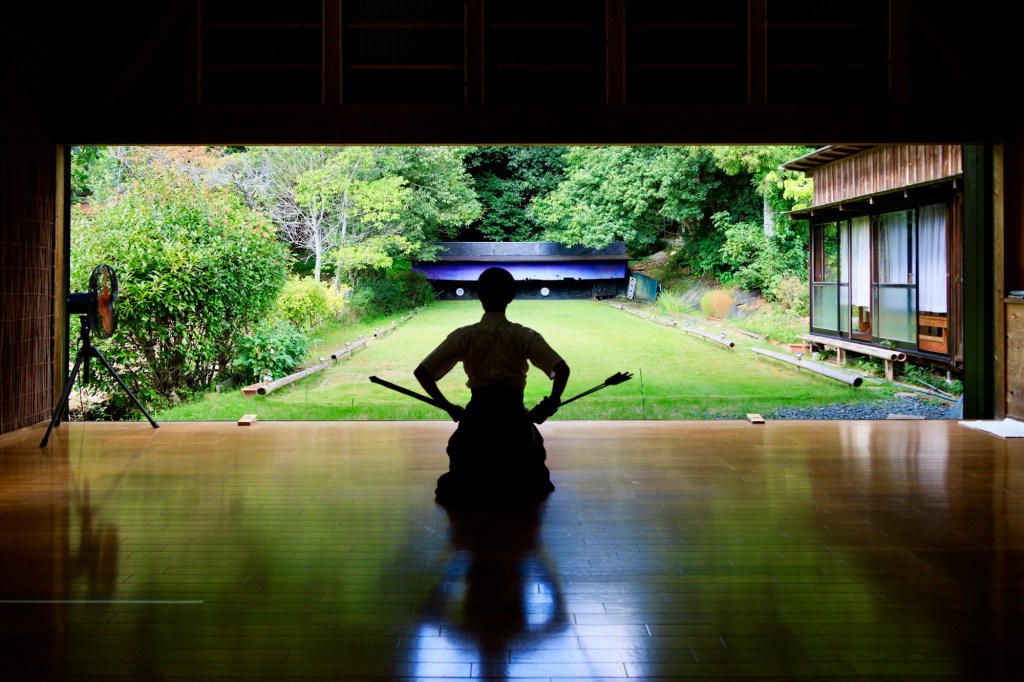
My wife practices kyudo, and one of the reasons we chose Hyogo Prefecture was because her former sensei has a dojo in Tamba, about an hour and a half drive north of Kobe. We spent the day there, and she was able to practice with her old sensei. Since no one else was there, they even let me try for the first time. Although I never hit the target and even lost one arrow, I found it interesting and can see why some people get hooked on it.
After we finished in the late afternoon, we drove 20 minutes to meet another kyudo practitioner, whose Instagram account is how my wife learned that her old sensei was still teaching at a new dojo in Tamba. Interestingly, they own a tea shop in the area, and we were treated to some delicious tea and wagashi, accompanied by a lively discussion about kyudo and life in general.
Day 4: Drive around Awaji Island
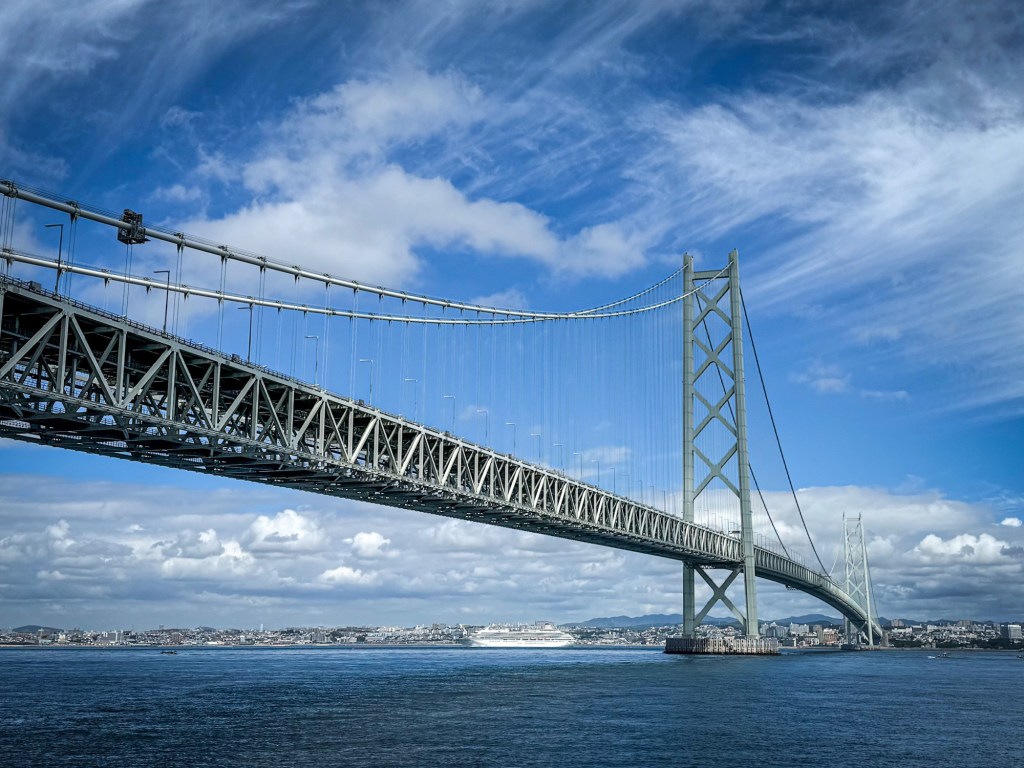
After driving north of Kobe the previous day, we decided to head south today, which meant crossing the enormous Akashi Kaikyo Bridge toward Awaji Island. The plan was to admire the bridge and then drive counterclockwise around the island, searching for spots to stop for lunch and, later, dessert along the way.
We noticed that the northeastern part of the island is seeing some development, with new stylish restaurants, cafes, and vacation homes likely aimed at attracting people from the city. However, we weren’t looking for a trendy meal, so we searched for a truly local spot—and we found it at Fish Masu Fisheries. You buy the grilled anago from one shop and then take it next door to a small eatery, where they prepare it with rice and miso soup. It was really good, and the sauce was delicious.
After enjoying the truly local spot, we decided to try one of the trendy new cafes and ended up having dessert at EMO Tokyo. It’s a stylish cafe perched on a hill overlooking the sea. The architecture resembles something you might see in Sydney or LA, and the owner speaks perfect English. The venue was amazing, though unfortunately, the dessert was just okay. We’ll give them a pass since they’re new, and the setting was fantastic—probably even more so at sunset.
For our last stop, we decided to head further south on the island and treat ourselves to some seafood rice bowls. We went to a kaisendon restaurant right in front of Michi no Eki Fukura. My wife had the Shirasu-don, while I opted for the Salmon-Ikura Oyakodon. I tried both, and while both were delicious, the Shirasu-don might have been better, even though it was the cheaper option. It’s a good reminder that more expensive doesn’t always mean better.
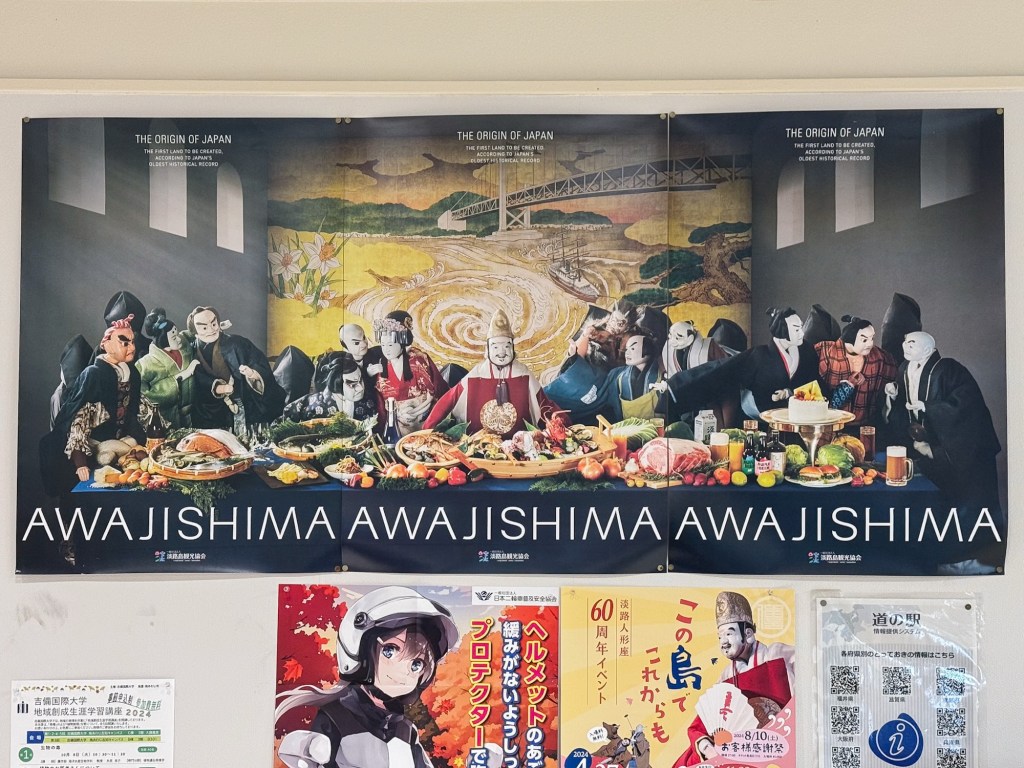
We had planned to drive along the western side of the island, but as it was getting late and we were starting to feel a bit tired, we decided to take the expressway straight back to Kobe, head to the onsen at the hotel, and call it a day.
Day 5: Drive to Himeji Castle
For our last day with the car, we decided to drive to Himeji Castle. It’s normally about an hour’s drive from Motomachi via the expressway, but since we weren’t in a rush, we opted to avoid the tolls, even though it added 30 more minutes to the trip. This gave us the chance to see more of Hyogo Prefecture, including some hilltop towns and farmland along the way.
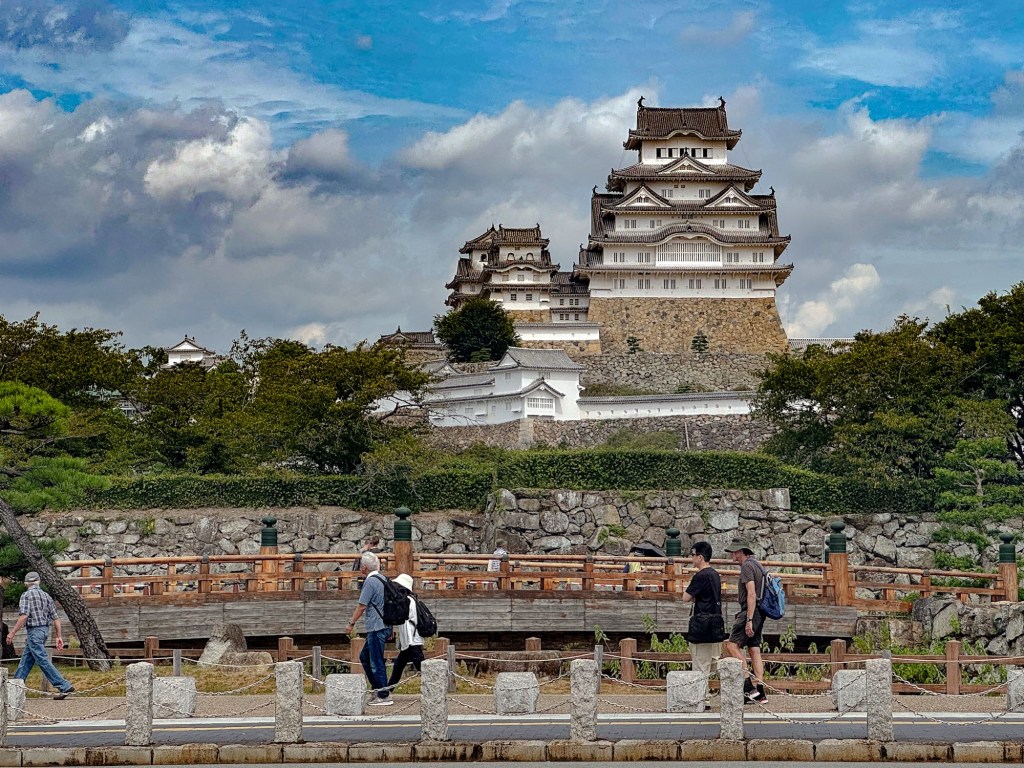
My wife had already visited Himeji Castle about two decades ago, but for me, it was my first time. Despite the summer heat, we took the tour inside the castle. This was the most touristy thing we did on this trip, and as a result, it was also the first time we were surrounded by other tourists—and the first time we ended up eating ‘touristy’ food just outside the castle. Still, it felt good to check off another item on my bucket list, as I finally got to visit what many consider the most beautiful castle in Japan.
Our rental car reservation was until 10 PM, so we still had some time to kill. We decided to stop by Mitsui Outlet Park on the way back, only to find out it was temporarily closed until the end of November—unlucky. So, we drove back to Kobe, returned the car, and looked for a yakiniku restaurant for our last night in the city.
We first tried to get seats at the popular Kobe Ishida-ya, only to find out that it and all its other branches were fully booked, even though it was 5 PM on a weekday. We searched Google Maps for another spot and ended up at Yakiniku Taku-chan, which had availability until 7 PM. It turned out to be a great choice and a perfect way to end the day.
Day 6: Return to Tokyo
We were scheduled to take the 2 PM bullet train from Shin-Osaka back to Tokyo, so we decided to take it easy and spend our last day enjoying good food near our hotel. We finally had lunch at the popular Chinese restaurant YunYun, which we’d been wanting to try for a while but always seemed to either have a long line or be closed by the time we arrived.
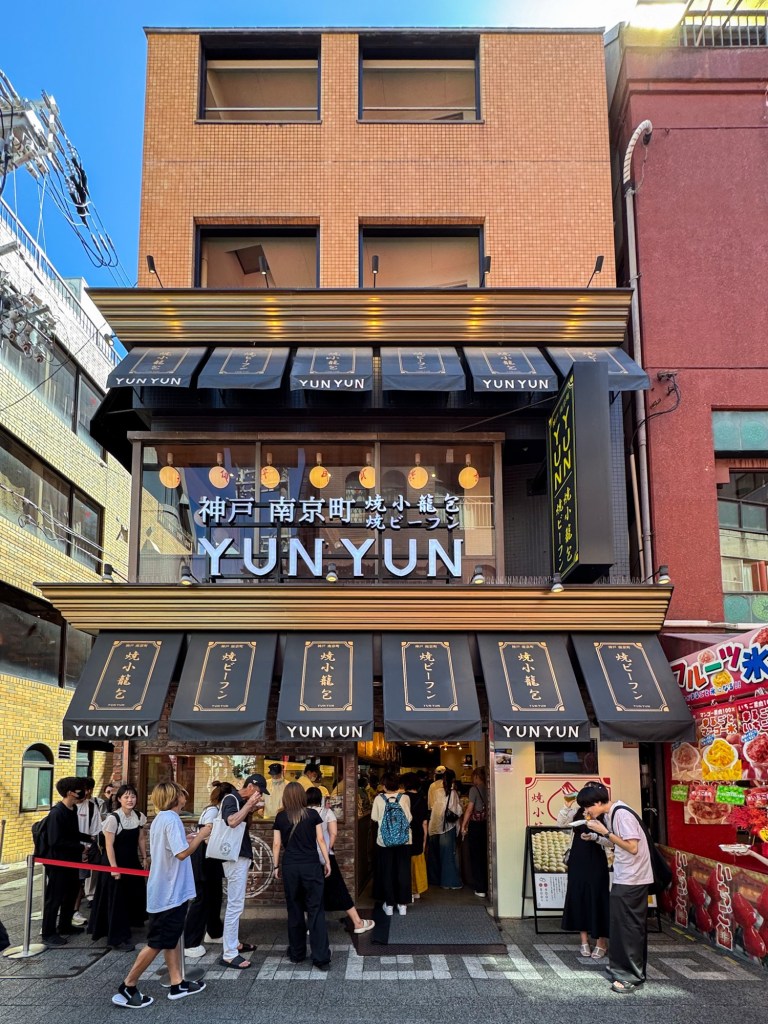
This time, we made sure to get there early before they opened. There was already a line, but we didn’t mind—we had time. After enjoying some tasty shoronpo, lu rou fan, a braised beef bowl, and yaki-bifun, we were ready to switch it up and grab some Western dessert. We initially planned to go to Patisserie Tooth Tooth in Sannomiya, but a quick search on Apple Maps showed another highly-rated shop closer to our hotel.
Patisserie Mont Plus had a 3.8 rating on Tabelog, which is considered quite high by their standards. We went in, and there were plenty of delicious-looking cakes on display. After spending about 10 minutes deciding, we ended up ordering the pistachio cake, the bergamot cake, and some coffee. Everything was delicious, and it was the perfect way to end our Kobe trip.
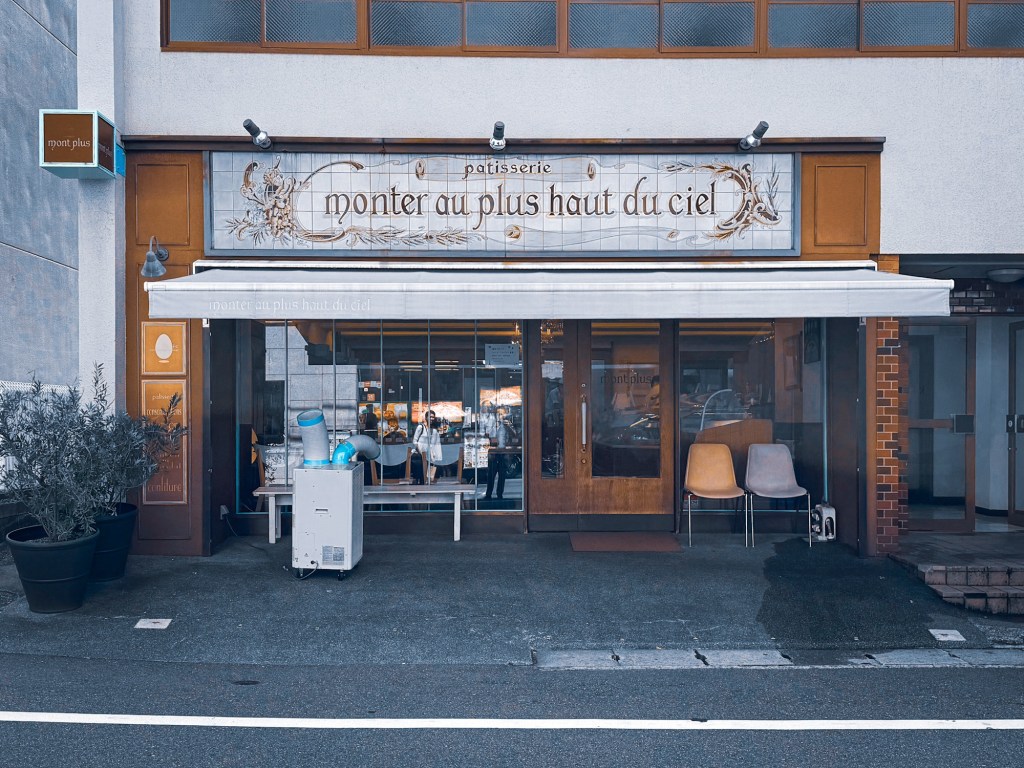
We then took the local train to Shin-Osaka and boarded the bullet train back to Tokyo.
Conclusion
Overall, we achieved our goals for this vacation. Fewer touristy attractions, but more local food and meaningful connections with people. Less traveling between different cities, but more focus on one city and its surrounding towns. No need for expensive or fancy hotels, as long as they were clean and within walking distance of the city center.
We also wanted to experience shopping at local grocery stores and cooking at our accommodations, but that didn’t happen this time since we stayed at a hotel without a kitchen. It helped that Kobe has so many local eateries, so we never ran out of options.
Looking forward to our next city. For now, we’re back in Tokyo with three days left of vacation before heading back to work.
Back to reality.
 Enrico in Tokyo